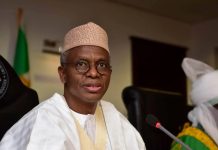

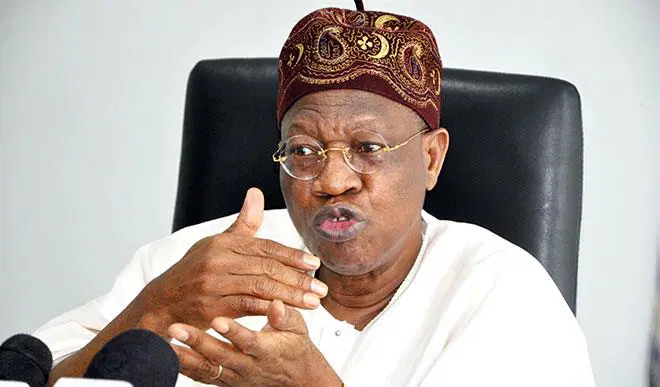
Lai Mohammed, former Minister of Information and Culture, on Thursday delivered a far-reaching and hard-hitting lecture on crisis communication, warning that business leaders, governments, and institutions risk severe consequences in today’s information-driven world if they fail to build public trust before crises emerge.
Speaking during the Guest Lecture Series at the University of Abuja Business School, Lai Mohammed said modern organisations now face the same level of intense public scrutiny as governments, stressing that communication should no longer be seen merely as a public relations tool, but as a critical leadership responsibility.
In his lecture titled, “Crisis, Communication and Commerce: What Business Leaders Can Learn From Government,” the former minister drew lessons from some of the most difficult moments during his eight years in office, including the Boko Haram insurgency, COVID-19 pandemic, #EndSARS protests and the suspension of Twitter in Nigeria.
He argued that in the digital age, crises are no longer defined only by events themselves, but by how quickly narratives are shaped around them.
“Communication is not a department. It is not something you outsource to a press secretary or a PR agency. It is a leadership discipline,” Mohammed declared.
According to him, organisations that survive crises are not necessarily those with the biggest budgets or strongest structures, but those that had already built credibility and trust before trouble emerged.
“The leaders who communicate best in a crisis are those who communicated consistently before the crisis arrived. Trust is not a communication tool; it is the infrastructure upon which communication rests,” he said.
Mohammed recounted how he inherited a hostile and sceptical civil service environment when the Muhammadu Buhari administration took office in 2015 after defeating the Peoples Democratic Party, PDP, which had ruled for 16 years.
Rather than launching aggressive media campaigns, he said he chose to first engage journalists, editors, media owners and indigenous language newspapers in order to build relationships and trust.
“A message sent without trust is noise. A message sent through established relationships is signal,” he noted.
Lai Mohammed emphasized that communication must remain a two-way process, cautioning leaders against reducing it to mere information dissemination.
“Communication is a conversation. We listened just as much as we spoke, and that allowed us to adapt policies and strategies in real time,” he said.
He also dedicated a large part of his lecture to how governments and corporations can tackle misinformation and protect their reputations during crises.
Drawing from the Boko Haram insurgency as a case study, Mohammed recounted how he secretly accompanied 40 local and international journalists to reclaimed insurgent territories in Borno State to counter claims that the Nigerian military had failed to retake occupied local government areas.
The trip, he said, transformed sceptical journalists into eyewitnesses whose reports changed public perception.
“We knew statements alone would not work. Proof is more powerful than position,” he said.
“When your organisation is under attack, counter with evidence, not assertion. Open your books, show your processes, invite independent observers, “he advised.
On the COVID-19 pandemic, Mohammed described Nigeria’s communication strategy as one of the country’s greatest successes during the health emergency.
He said government relied heavily on trusted community figures, local languages and real-time public feedback to encourage compliance with safety protocols and combat dangerous misinformation.
“A grandmother in Katsina may not listen to a minister in Abuja, but she will listen to her imam or community leader. The messenger is as important as the message,” he explained.
He said Nigeria’s comparatively low fatality figures during the pandemic demonstrated the power of strategic communication and rapid response systems.
Mohammed also gave an emotional reflection on the #EndSARS protests, describing them as the most difficult communication challenge of his time in office.
He acknowledged that the protests began as genuine expressions of frustration over police brutality but later became vulnerable to what he termed “weaponised misinformation.”
According to him, fake news and unverified reports spread rapidly on social media, making it increasingly difficult for government narratives to gain traction.
“In the social media age, lies spread faster than corrections. The only durable defence against misinformation is the trust you have already built before the crisis,” he warned.
He warned business leaders to start viewing misinformation as a major operational and reputational threat.
“Misinformation is no longer only a political issue. It has become a business risk that should sit on the same risk register as financial and regulatory threats,” he said.