
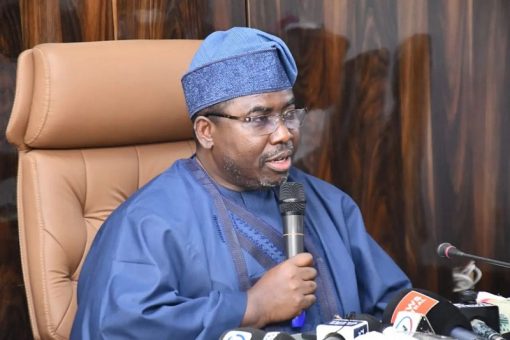
Joash Amupitan, Chairman of the Independent National Electoral Commission, has called on the Inspector General of Police, Olatunji Disu, to strengthen collaboration and support from the Nigeria Police Force ahead of the 2027 general elections, describing security as both the “first mile and the last mile” of the electoral process.
Independent National Electoral Commission, in a bulletin released on Thursday, said Joash Amupitan made the appeal on Wednesday during a courtesy visit to the Inspector General of Police in Abuja.
According to the commission, Amupitan informed the police leadership that INEC had begun full-scale preparations for the 2027 elections, with the Presidential and National Assembly polls scheduled for January 16, 2027, while the Governorship and State Houses of Assembly elections are set for February 6, 2027.
The INEC chairman told the IGP that the release of the election timetable and ongoing political party activities, including ward congresses and conventions, had effectively activated the electoral process and constituted what he described as a “security trigger” requiring immediate and sustained attention from security agencies.
Amupitan identified electoral malpractices, vote trading and threats of violence as factors that continue to undermine public confidence in the electoral system and pose direct risks to national security.
He called for proactive security measures, including comprehensive risk assessments to identify potential flashpoints before they escalate.
“The scale of insecurity across various parts of the country presents a threat to the conduct of free and fair elections. It is essential that we carry out thorough security risk analyses ahead of the elections,” he said.
The INEC chairman also drew attention to upcoming off-cycle governorship elections in Ekiti and Osun States, as well as a series of bye-elections across the country, urging that all of them be treated as critical milestones deserving of full security coverage. “These elections are crucial milestones in Nigeria’s democratic journey, and it is imperative that they are conducted peacefully and seamlessly,” he said.
Amupitan emphasised the role of the Inter-Agency Consultative Committee on Election Security, ICCES, which he described as the “heartbeat” of operational safety during elections, saying its effectiveness must shift from reactive policing to proactive intelligence coordination.
“Our success depends on ICCES moving from reactive policing to proactive intelligence coordination,” he said, stressing the need for a unified, multi-agency approach to protecting electoral personnel, materials and voters.
Responding, Olatunji Disu assured the Independent National Electoral Commission of the Nigeria Police Force’s full readiness, pledging that officers would carry out their duties with professionalism, neutrality, and strict compliance with the Constitution, the Electoral Act, and other existing laws.
Disu revealed that the Force had already commenced strategic threat assessments and intelligence mapping across the country, identifying political violence, the spread of illegal arms, voter intimidation, cyber interference, misinformation, and attacks on electoral infrastructure as key security challenges requiring proactive measures.
The Inspector General also vowed that no political party, candidate, or interest group would be given preferential treatment, warning that any officer involved in partisan behaviour or unethical conduct would face disciplinary action and possible prosecution. “We will enforce electoral laws firmly and professionally,” he stated.
He further urged the early release and broad circulation of the election timetable to support effective planning, logistics coordination, personnel training, and collaboration among relevant agencies.
Joash Amupitan, Chairman of the Independent National Electoral Commission, has called on the Inspector General of Police, Olatunji Disu, to strengthen collaboration and support from the Nigeria Police Force ahead of the 2027 general elections, describing security as both the “first mile and the last mile” of the electoral process.