
GTN Exclusive Report:
In the brutal chessboard of Nigerian politics, emotions hardly matter. Power, loyalty, structure, influence, and strategic timing remain the true currencies of survival. The unfolding political drama between Siminalayi Fubara and Nyesom Wike has once again exposed this hard reality.
For months, many believed Governor Fubara had successfully escaped the political shadows of his estranged godfather, Wike. His growing alliance with powerful governors and reported support from influential figures within the ruling establishment gave the impression that his second-term ambition was already secured.
But politics is not won by assumptions. It is won by structure, influence, negotiation, and strategic endurance.
The APC Screening Drama
The turning point reportedly came during the APC screening exercise at the Plateau Governors’ Lodge in Abuja. While other governors seeking re-election were smoothly screened and ceremoniously treated, Fubara’s experience was visibly different.
According to insiders, the Rivers governor met resistance from members of the screening committee, who allegedly reminded him of unresolved political agreements and existing power understandings within the system.
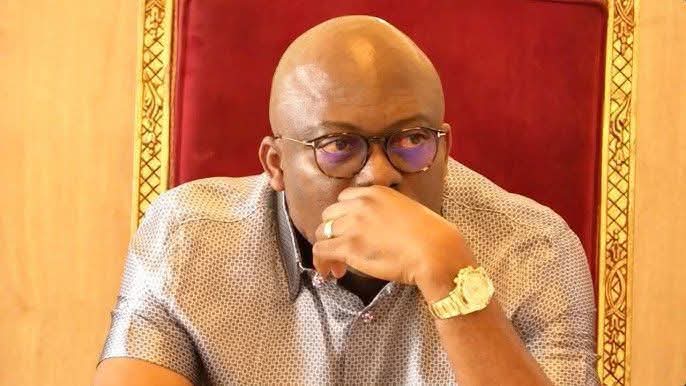
His appearance lasted barely twenty minutes before he walked out visibly upset. Journalists waiting outside expected a reaction, clarification, or even a political counterattack. Instead, Fubara simply muttered, “No comment.”
That silence may have become one of the greatest political mistakes of the moment.
In politics, perception is everything. Silence in a season of political warfare is often interpreted as weakness, defeat, confusion, or surrender. By refusing to immediately control the narrative, Fubara allowed opponents and political observers to define the story for him.
The Internal APC Power Equation
What many Nigerians fail to understand is that today’s APC is not a united political family. Multiple power blocs exist within the ruling party.
One bloc is believed to be closely aligned with the Presidency and Wike’s growing influence within the federal power structure. Another bloc revolves around governors loyal to the chairman of the Progressive Governors Forum, Hope Uzodinma.
However, when it comes to political machinery, financial influence, strategic coordination, grassroots intimidation, and access to the central power structure, insiders argue that the Presidency-Wike alliance currently holds stronger cards.
This is where Wike’s political mastery became obvious again.
Wike’s Political Value
Whether loved or hated, Wike has built one thing many politicians struggle to acquire
fear-backed influence.
Across political divides, he commands attention because he understands how Nigerian power works.
Insiders claim Wike strategically invested heavily in building relationships within the APC power structure long before the current Rivers crisis escalated.
Today, many stakeholders within the ruling party reportedly see him not merely as a defector or ally, but as a valuable political asset whose influence stretches across the South-South and beyond.
When political calculations were reportedly weighed between both men, many power brokers allegedly concluded that Wike still commands deeper loyalty networks and broader political respect than Fubara.
In Nigerian politics, loyalty often follows structure, and structure follows survival.
Where Fubara Miscalculated
Governor Fubara’s biggest political weakness may not have been his disagreement with Wike, but his apparent overconfidence in assurances from political allies.
Sources say he was repeatedly assured that governors were fully behind him and that his second-term ticket was guaranteed.
Unfortunately, Nigerian politics has repeatedly shown that alliances are temporary, while interests are permanent.
Another major error was failing to immediately engage the media after the controversial screening episode. Had he openly addressed Nigerians and exposed what he believed was political betrayal, he might have gained sympathy, shaped public opinion, and repositioned himself as a victim of elite manipulation.
Instead, his silence created uncertainty.
Politics rewards those who seize the microphone before opponents seize the narrative.
The Bigger Lesson for Nigerian Politicians
The Rivers crisis offers several painful but important lessons:
Never underestimate a political godfather who still controls structure.
Power without grassroots and institutional loyalty is fragile.
In Nigerian politics, today’s ally can become tomorrow’s negotiator.
Media management is as important as political strategy.
Timing, communication, and perception can determine political survival.
Above all, the crisis reinforces an ancient truth echoed in the Holy Scriptures:
“To everything there is a season, and a time to every purpose under the heaven… a time to keep silence, and a time to speak.” — Ecclesiastes 3:1,7
Many analysts believe Wike understood the season better than Fubara.
Final Analysis:
As things stand, the political momentum appears to favor Wike once again. The former Rivers governor has demonstrated remarkable resilience, strategic patience, and ruthless political calculation.
For Governor Fubara, the road ahead may become increasingly difficult unless he rebuilds independent political structures, reconnects with the grassroots, and learns the deeper mechanics of power negotiation in Nigeria.
The unfolding Rivers political battle is no longer just a local conflict. It has become a national case study on godfatherism, loyalty, power brokerage, and the unforgiving nature of Nigerian politics.
And in this round of the political chess game, many observers believe Wike has once again stolen the show.