
EXCLUSIVE REPORT GTN Investigation Desk:
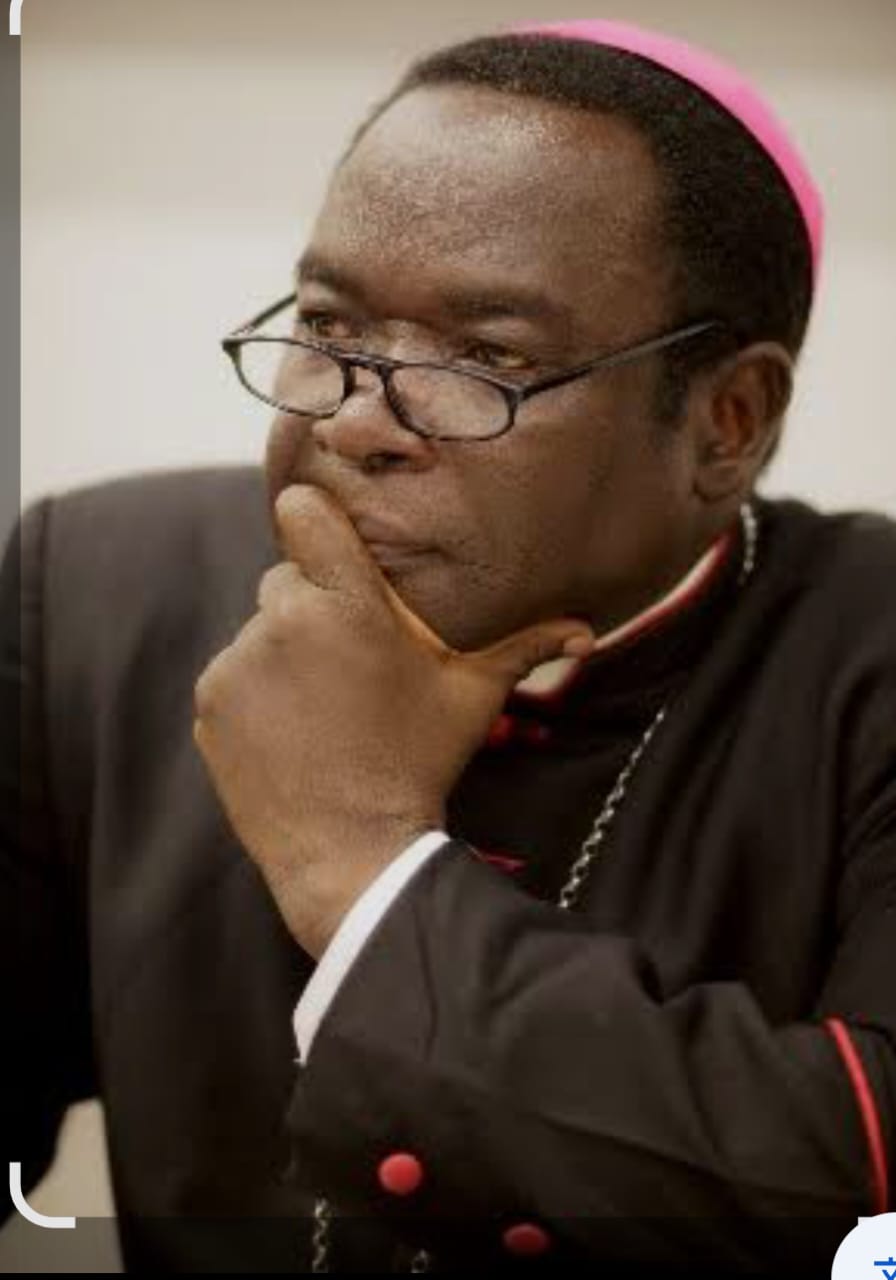
Caption: Once feared by those in power and revered by ordinary Nigerians, Bishop Matthew Hassan Kukah now faces growing scrutiny over his perceived silence on the worsening killings in Northern Nigeria following his acceptance of a government appointment.
For decades, Matthew Hassan Kukah stood as one of Nigeria’s most respected moral voices. Beyond the pulpit, he earned national recognition as a fearless critic of corruption, injustice, bad governance, and religious intolerance. In moments when many influential figures chose caution, Kukah often chose confrontation speaking truth to power with uncommon boldness.
From the military era to successive civilian administrations, his interventions carried weight because they were seen as principled rather than political. As a prominent member of the National Peace Committee alongside Abdulsalami Abubakar, Kukah played a critical role in mediating electoral tensions and promoting national stability. To many Nigerians, particularly in the North, he represented a rare kind of cleric: independent, courageous, and seemingly beyond compromise.
When the Prophet Appears Silent
That long-standing image has, however, come under increasing debate in recent months.
The shift became more noticeable after Kukah accepted appointment as Chairman of the Governing Council of the Federal University of Applied Sciences, Kachia, Kaduna State, in 2024. Critics argue that since assuming the position, his once-sharp public criticism of government policies and security failures has significantly softened.
The controversy intensified following comments attributed to him which appeared to caution against describing the killings in parts of Northern Nigeria as “genocide.” Those remarks triggered strong reactions from civil society groups, Christian organizations, and community leaders who point to recurring attacks in Plateau, Benue, and Southern Kaduna as evidence of systematic violence against vulnerable communities.
The debate has also gained international attention. In 2025, concerns over alleged religiously targeted killings in Nigeria were discussed in U.S.
Congressional circles and international advocacy forums. While the Nigerian government and the African Union leadership maintained that the crisis reflects terrorism, banditry, and communal violence affecting both Christians and Muslims, victims’ groups insisted that many communities continue to feel abandoned and unprotected.
Into this emotionally charged conversation stepped Alex Barbir, a U.S.-based humanitarian worker, whose appearance on TVC News reignited public debate after he argued that vulnerable communities should be allowed to defend themselves against persistent attacks. His intervention sharply contrasted with Kukah’s more restrained recent posture, prompting renewed public reflection on whether proximity to government inevitably weakens independent voices.
The Tai Solarin Parallel
History offers similar examples.
Tai Solarin was once regarded as one of Nigeria’s fiercest social critics — outspoken, uncompromising, and deeply admired for his activism. But after accepting the appointment as Chairman of the People’s Bank under the military administration of Ibrahim Babangida, many observers believed his influence gradually diminished.
Critics at the time accused the institution of becoming entangled in politically influenced patronage, while Solarin himself appeared less vocal on broader national issues.
Babangida would later reportedly taunt him with the remark: “You couldn’t manage a bank, yet you criticize someone managing a country.”
Whether entirely fair or not, the episode left a lasting lesson in Nigerian political history: proximity to power can sometimes weaken the moral force of previously independent voices.
The Burden of Moral Leadership
Leadership — especially moral leadership — comes with expectations that go beyond titles and appointments.
When a figure widely regarded as a conscience of the nation appears quieter during periods of bloodshed, displacement, and rising ethnic tension, public disappointment often follows. In highly polarized societies like Nigeria, silence is rarely interpreted as neutrality. Many see it either as strategic caution or reluctant complicity.
At the same time, defenders of engagement argue that participation within government structures can create opportunities for influence and reform that outsiders may never achieve. They insist that constructive engagement, rather than perpetual opposition, may sometimes produce more meaningful results.
Yet the larger question remains unresolved: can a prophetic voice remain truly independent while operating within the corridors of power?
What Happens Next?
Despite current criticisms, Bishop Kukah remains one of Nigeria’s most respected intellectuals, religious leaders, and peace advocates. His contributions to national dialogue and electoral stability through the National Peace Committee continue to be widely acknowledged.
Still, the growing public debate surrounding his recent silence highlights a deeper national concern Nigeria does not merely need influential voices; it needs voices willing to remain consistent even when speaking becomes uncomfortable or costly.
For many observers, the issue is bigger than one bishop. It is about the enduring tension between principle and proximity to power, activism and access, conscience and compromise.
The unanswered question now is whether Kukah can once again fully embody the fearless independence that once made him indispensable to millions of Nigerians.
What is your view?
Do government appointments inevitably weaken the moral authority of religious leaders and activists in Nigeria, or is engagement from within the system necessary to drive meaningful change?