
GTN EXCLUSIVE:
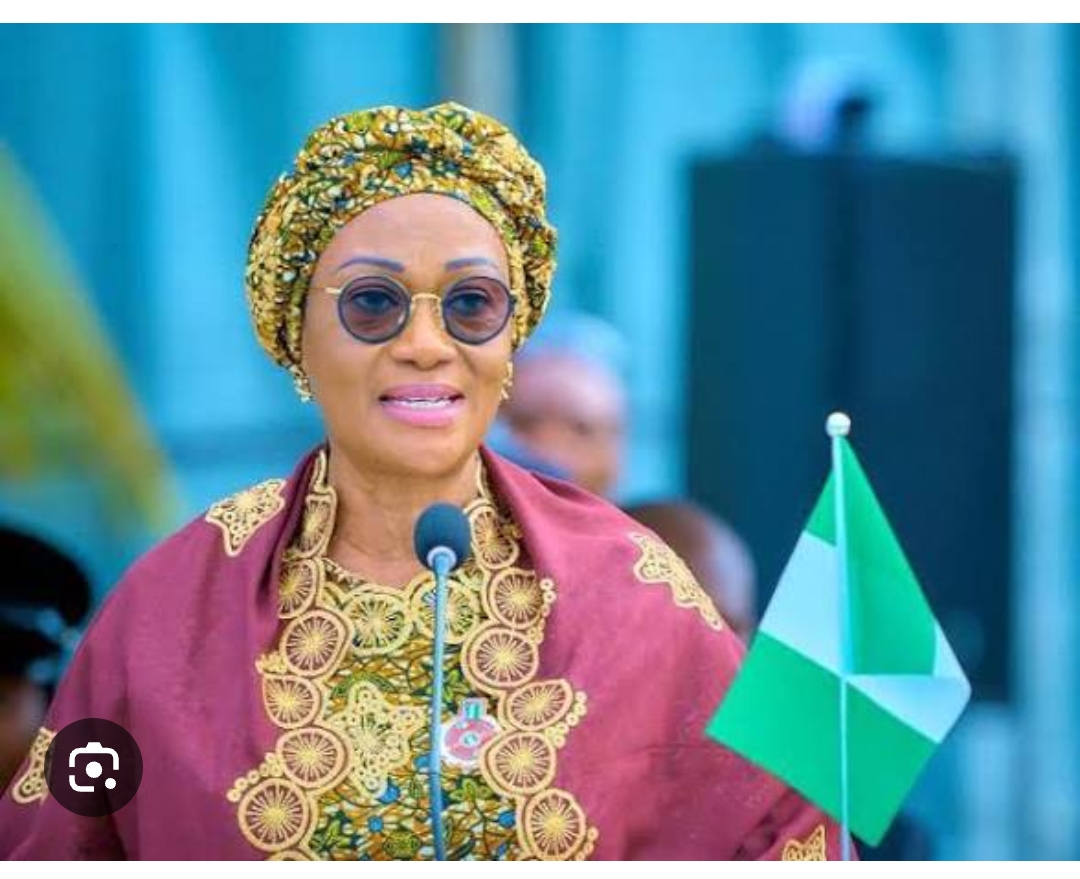
The recent remark by Nigeria’s First Lady, , describing the 7th, 8th and 9th Senate as periods when the National Assembly was “really, really good,” has continued to generate widespread reactions across the country, with many Nigerians interpreting the statement as an indirect verdict on the current 10th Senate.
What has particularly stirred public debate is the fact that the current Senate leadership and majority of its members belong to the same ruling All Progressives Congress (APC) government her husband, President Bola Ahmed Tinubu, leads. Political observers say the comment raises difficult questions about internal contradictions within the ruling establishment itself.
To many Nigerians, the statement reflects the growing perception that the present National Assembly has failed to assert its independence as a democratic institution expected to serve as a check on executive power. Critics argue that if a prominent stakeholder within the APC-led government openly praises past Senates over the present one, it reinforces concerns that the 10th Assembly is increasingly viewed as weak, compromised, and overly submissive to executive influence.
In the words of several analysts who spoke with GTN, “a house divided against itself cannot stand.” They insist that such comparisons from within the ruling circle reveal silent dissatisfaction among even top government insiders about the direction of Nigeria’s democracy.
Speaking during the flag-off ceremony for the distribution of farm inputs in Niger State, Mrs. Tinubu fondly recalled her years in the Senate, stating:
“It is always a pleasure to see my former colleagues. That was when the Senate was really, really good.”
Though she did not directly mention the 10th Senate, the timing and tone of her remark have been widely interpreted as a subtle but powerful comparison.
A sociologist at the , Dr. Edmund Nwagbo, described the statement as politically significant, noting that Nigerians should not dismiss it as a mere nostalgic reflection.
According to him, the comment indirectly highlights the declining public confidence in the current legislature.
“What Nigerians are witnessing today is a growing concern that the Senate has abandoned its constitutional role as an independent arm of government. Many citizens now see the National Assembly as a rubber stamp institution where executive requests receive automatic approval without rigorous scrutiny,” he stated.
Similarly, civil society voices argue that the quality of democratic governance has weakened over time, with many Nigerians frustrated over economic hardship, insecurity, corruption allegations, and the perceived lack of accountability among political leaders.
However, some APC loyalists insist the First Lady’s statement should not be politicised. They argue that Mrs. Tinubu merely expressed personal nostalgia about her years in the Senate and the camaraderie she shared with former colleagues.
Others believe the controversy reflects deeper divisions and anxieties within Nigeria’s political class, especially as public dissatisfaction continues to mount over governance and the state of the economy.
Ironically, while the First Lady’s comments have triggered criticism of the present Senate, the event itself was focused on agriculture and food security initiatives under the Renewed Hope Agenda. Niger State Governor highlighted the state’s investment in mechanised farming, including the deployment of tractors, harvesters, and fertiliser support for farmers.
Yet beyond agriculture, it was the First Lady’s Senate reflection that dominated political conversations nationwide.
For many Nigerians, the debate goes beyond personalities. It touches the very heart of democratic accountability and whether the National Assembly still possesses the courage, independence, and moral authority to defend the interests of the people.
As reactions continue to trail the statement, one message appears clear in the court of public opinion: when key voices within a ruling establishment begin to openly glorify the past over the present, Nigerians naturally see signs of a system struggling with internal contradictions — a political house quietly divided against itself.