

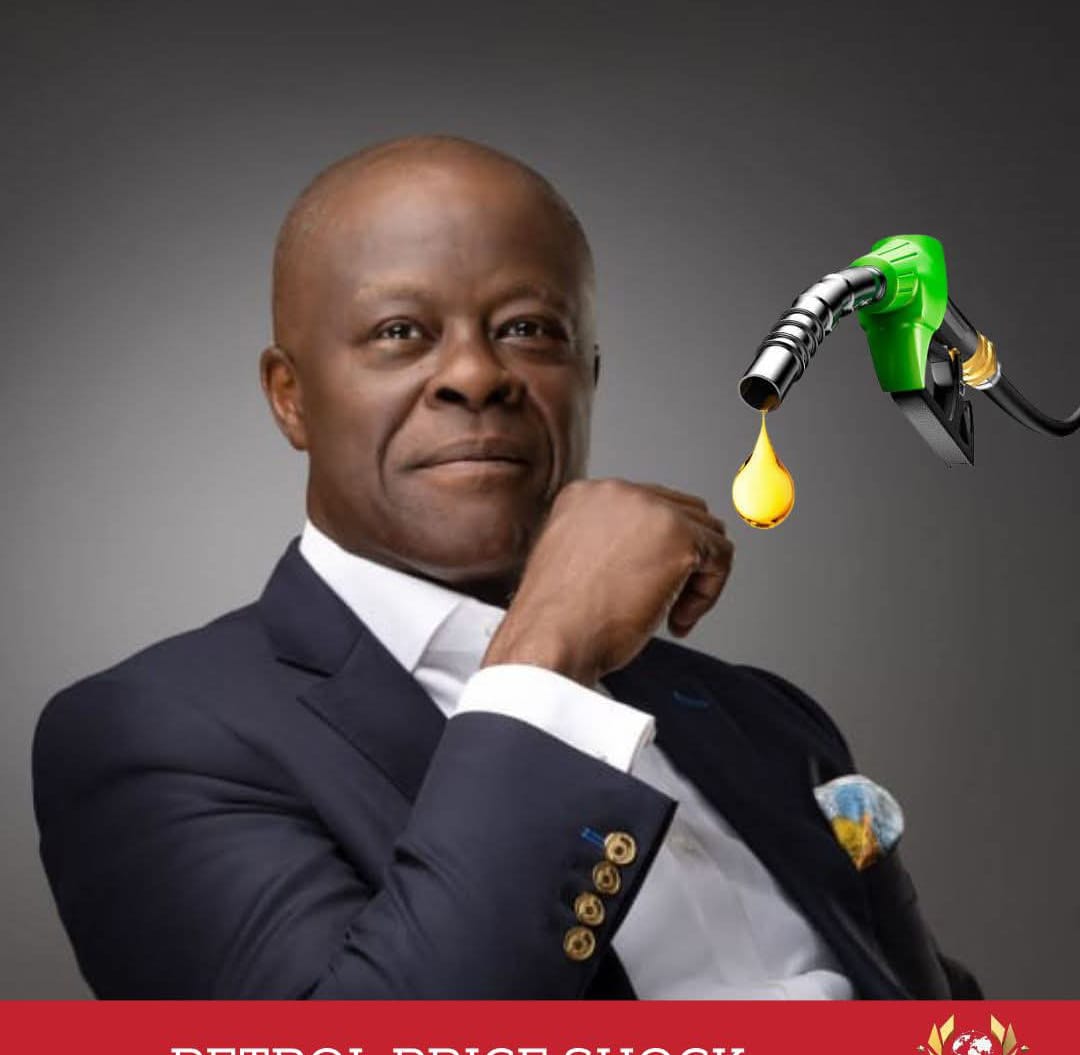
Global War, Local Pain: How the Iran Crisis Is Driving Nigeria’s Fuel Price Surge and Squeezing the Poor.
The escalating tensions involving Iran and its regional rivals have triggered fresh instability in the global oil market, sending crude prices soaring and placing renewed pressure on fuel costs around the world.
For Nigeria, the ripple effect is immediate and severe. As petrol pump prices continue to climb across the country, Nigeria’s Minister of Finance, Wale Edun, has stated that the Federal Government cannot control fuel prices because the downstream petroleum sector has been deregulated and market forces now determine pump prices.
This reality has left millions of Nigerians—especially low-income earners—exposed to a harsh economic storm.
Governance Today Nigeria (GTN) conducted an analysis of the situation and its implications for the Nigerian economy and the everyday citizen.
The Global Trigger: War and Oil Market Shock
Conflicts in the Middle East have historically influenced global oil supply. With rising geopolitical tensions involving Iran—a major oil-producing nation—global crude prices have surged due to fears of supply disruptions through key energy corridors.
When crude oil prices rise globally, countries dependent on imported refined petroleum products—like Nigeria—immediately feel the impact.
Despite being one of Africa’s largest oil producers, Nigeria still imports a large portion of its refined fuel, leaving its economy vulnerable to global market fluctuations.
Market Forces Take Over
With the removal of petrol subsidies and the liberalisation of the downstream sector, the Nigerian government no longer directly fixes pump prices.
According to Finance Minister Wale Edun, fuel prices will now be determined by:
Global crude oil prices
Exchange rate of the naira
Importation and refining costs
Distribution logistics
In simple terms, whenever oil prices rise globally or the naira weakens, Nigerians should expect higher fuel prices at the pump.
The Harsh Reality for Low-Income Earners
GTN’s economic analysis shows that the consequences of rising petrol prices extend far beyond the filling station.
- Transportation Costs Will Surge
Fuel is the lifeblood of Nigeria’s transport sector. As petrol prices rise, transport fares follow immediately.
For workers earning between ₦30,000 and ₦70,000 monthly, transportation alone may consume a significant portion of their income.
Daily commuters in cities such as Abuja, Lagos, and Kano are already reporting steep increases in bus fares.
- Food Prices Will Climb
Nigeria’s food supply chain depends heavily on road transport.
When fuel prices increase:
transporting farm produce becomes more expensive
food sellers increase prices
urban households spend more on basic meals.
This could push staples like rice, garri, yam and tomatoes further out of reach for poor households.
- Small Businesses Face Survival Crisis
Millions of small businesses rely on generators due to unreliable electricity supply.
Higher petrol and diesel costs threaten businesses such as:
bakeries
barbing salons
frozen food vendors
small manufacturing workshops.
For many operators, rising energy costs could mean reducing operations or shutting down completely.
- Inflation Pressure Will Intensify
Fuel prices affect almost every sector of the economy.
When fuel rises:
transportation rises
food prices rise
production costs rise
rent and service costs eventually rise.
This creates a chain reaction that drives inflation and erodes the purchasing power of ordinary Nigerians.
Nigeria’s Energy Paradox
Nigeria remains one of the world’s major crude oil producers, yet its citizens face some of the most volatile fuel prices.
The reasons include:
limited domestic refining capacity
dependence on imported fuel
foreign exchange instability
inadequate infrastructure, corruption and lack of leaders’ accountability.
Until domestic refining improves significantly, the country will remain exposed to global oil shocks.
Survival Strategies for the Masses
GTN analysis suggests that Nigerians may have to adopt new coping strategies to survive the current economic realities.
Reduce Fuel Dependence
Carpooling, public transport use and reduced travel could help households cut fuel expenses.
Explore Alternative Energy
The government is promoting the use of compressed natural gas (CNG) as a cheaper alternative for vehicles.
Diversify Income
Side businesses and multiple income streams are increasingly becoming necessary for financial survival.
Strengthen Cooperative Support
Community savings groups and cooperative societies may help households withstand economic shocks.
What Government Must Urgently Address
Economic experts say urgent policy actions are needed to cushion the impact of rising fuel prices:
expand domestic refining capacity
stabilise the naira
invest in affordable mass transit
improve electricity supply
introduce targeted social protection programmes.
GTN Final Word
The war in the Middle East may be thousands of kilometres away, but its consequences are being felt at every Nigerian filling station and kitchen table.
As global oil politics reshapes fuel prices, the real burden is falling on the shoulders of ordinary Nigerians—especially the poor.
For millions already struggling with inflation and unemployment, the question is no longer whether fuel prices will rise again.
The real question is how long the Nigerian masses can endure the pressure before economic survival becomes a national emergency.