
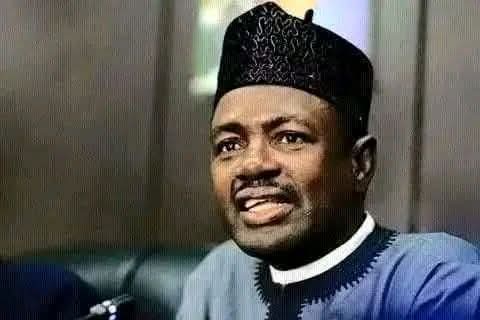
In a candid statement rapidly gaining traction across social and traditional media, veteran Nigerian politician Labaran Maku declared on Monday that his political journey has been driven by faith and personal conviction rather than patronage or immoral shortcuts.
“I am not a saint, but I am not a thief. I always remember and depend on God in my activities. With no godfather, I became commissioner, deputy governor, and minister, while some people are joining cults because of power,” Maku said in remarks shared by Political Affairs Int. on social media.
The comment comes amid renewed conversations about political financing, influence, and ethical conduct in Nigeria’s public life — themes that resonate deeply as the country moves toward the 2027 general elections.
At 63, Maku is no stranger to Nigeria’s political landscape. Born in 1962 in Wakama, Nasarawa State, he rose through grassroots activism and student union leadership before serving in multiple high-profile public offices. His early political career included appointments as Commissioner for Information and Internal Affairs, and Commissioner for Youth and Sports in Nasarawa State, positions he held from 1999 to 2003. He later served as Deputy Governor of Nasarawa State from 2003 to 2007. Under the administration of President Goodluck Jonathan, Maku went on to serve as Minister of Information and Communications from 2010 to 2015.
Maku’s declaration touches on a long-standing issue in Nigerian politics: the influence of “godfathers” — powerful backers who often shape political careers through financial support or party control. In his remarks, Maku portrayed his career as self-driven, guided by faith, and free from secretive deals or ruthless power plays. He suggested that some politicians resort to extreme measures, including “joining cults because of power.”
Observers note that the message may be directed at young Nigerians, many of whom have increasingly criticised corruption, patronage, and moral decay in public office. By framing his journey through a spiritual lens, Maku appears to contrast his path with what he describes as shortcuts to influence — a narrative that may resonate with citizens disillusioned by politics as usual.
His comments also echo a pattern in his past statements. During his 2015 and 2019 gubernatorial bids in Nasarawa State, Maku publicly rejected practices he viewed as unethical, insisting that he did not need to join cults or rely on mystical means to attain office.
Political analysts suggest that Maku’s latest remarks may signal a broader attempt to reaffirm his image as an independent, values-driven leader at a time when many Nigerians are demanding greater accountability and transparency from public officials.
As the nation looks ahead to the 2027 elections, voices like Maku’s are expected to contribute to ongoing debates about integrity, influence, and leadership in Nigeria’s evolving democratic landscape.