
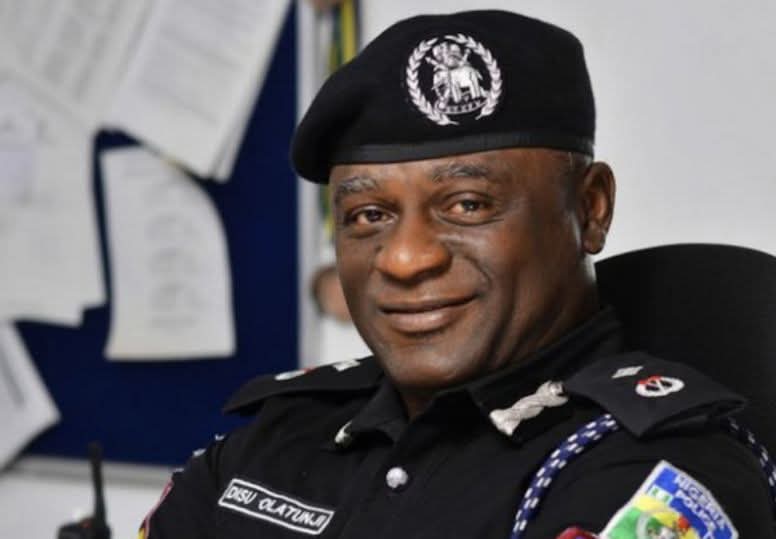
Appointment and Transition : In a major shake-up of Nigeria’s security leadership, Olatunji Disu was appointed the 23rd Inspector-General of Police (IGP) on February 23, 2026, following a directive by President Bola Tinubu.
He succeeds Kayode Egbetokun, marking a new chapter for the Nigeria Police Force (NPF) at a time when public expectations around security reforms, professionalism, and intelligence-driven policing are high.
Background: The Making of a Career Officer
Popularly known as Tunji Disu, he is a seasoned career officer with over three decades of service in the Nigeria Police Force.
Early Life & Education
Disu hails from the South-West geopolitical zone of Nigeria and built his academic foundation before joining the Force in the early 1990s. Over the years, he underwent several local and international security and intelligence trainings, sharpening his expertise in:
Criminal investigation
Tactical operations
Public order policing
Strategic command leadership
Rise Through the Ranks
Disu’s journey to the top was marked by steady promotions and high-impact assignments.
Key Positions Held: Commander, Rapid Response Squad (RRS), Lagos State
He gained public recognition for leading reforms that repositioned the RRS as a responsive anti-crime unit, restoring public confidence in rapid policing operations.
Deputy Commissioner of Police (Operations), Lagos State Command
Played a frontline role in coordinating tactical responses to violent crimes and urban security challenges.
Commissioner of Police, Rivers State Command
Managed one of Nigeria’s most politically sensitive and security-volatile states, overseeing election security operations and tackling cultism, kidnapping, and pipeline vandalism.
Assistant Inspector-General of Police (AIG)
Before his elevation to IGP, he served at the strategic command level, contributing to national security policy implementation.
Achievements & Reform Footprints
Urban Crime Suppression
During his time in Lagos and Rivers, Disu was credited with strengthening intelligence-based operations that led to:
Reduction in armed robbery incidents
Crackdowns on kidnapping syndicates
Improved emergency response time
Tactical Reorganization
He modernized operational strategies within units under his command, emphasizing:
Surveillance-driven policing
Inter-agency collaboration
Community engagement initiatives
Professional Discipline & Public Image
Disu reportedly pushed internal discipline measures while promoting professionalism among officers — a key factor that shaped his public reputation as a no-nonsense but reform-minded officer.
Governance Today Nigeria: Profile Insight
According to Governance Today Nigeria’s profile assessment:
Disu represents a blend of operational toughness and administrative capacity.
His career reflects merit-based progression rather than political favoritism.
He is viewed as a bridge between traditional policing and emerging digital-era security demands.
The report highlights that his appointment signals:
A push for stronger federal command coordination
Renewed focus on intelligence-led policing ahead of future national elections
An attempt to stabilize internal command structure within the Force
What This Means for Nigeria:
As Nigeria grapples with banditry, terrorism, kidnapping, and electoral security concerns, Disu’s leadership will likely be judged on:
Reform implementation speed
Officers’ welfare and morale
Public trust restoration
Crime statistics in volatile regions
His appointment comes at a critical moment, and expectations are high.