
The Ideal and Constitutional Stages of Budget Passage
Under Nigeria’s constitutional democracy, budget passage is meant to follow a deliberate, multi-layered due-diligence process, including:
Budget Presentation (Appropriation Bill Introduction)
The President presents the budget to a joint sitting of the National Assembly, outlining macroeconomic assumptions, fiscal priorities, revenue projections, and sectoral allocations.
First Reading
This is the formal introduction of the bill. Traditionally, it sets the tone for seriousness, as members receive the full budget documents for study.
Second Reading – Policy and Principle Debate
This stage is the heart of legislative scrutiny. Lawmakers debate:
-
Economic assumptions (oil price benchmarks, exchange rate, inflation)
-
Debt sustainability and deficit financing
-
Sectoral priorities (education, health, security, infrastructure)
-
Alignment with national development plans
In functional legislatures, this stage lasts several days and reflects ideological and regional diversity.
Committee Stage (Sector-by-Sector Scrutiny)
Standing committees engage MDAs, interrogate budget proposals, verify figures, and demand justifications. This stage is meant to expose:
-
Inflated or duplicated projects
-
Unrealistic revenue projections
-
Hidden expenditures and off-budget items
Public Hearings and Stakeholder Inputs
Civil society, professional bodies, and experts contribute, enhancing transparency and public ownership.
Harmonisation and Third Reading
The House and Senate reconcile differences, pass a final version, and forward it for presidential assent.
When properly executed, this process acts as a check on executive power, protects public funds, and aligns spending with national priorities.
A Look Back: The Saraki-Era National Assembly (8th Senate)
The 2015–2019 National Assembly—particularly under Senate President Bukola Saraki—was far from perfect. Allegations of corruption existed, and political tensions were high. Yet, one fact remains indisputable:
The budget process was taken seriously.
The 2016 budget witnessed four full days of debate at the second-reading stage. Senators openly questioned:
-
Revenue assumptions
-
Oil production benchmarks
-
Exchange-rate projections
-
Debt-servicing costs
There was visible opposition—not necessarily ideological purity, but institutional independence. Nigerians could see, hear, and follow the debates. Lawmakers argued, disagreed, and defended positions.
The Senate asserted itself as a co-equal arm of government, not a ceremonial appendage of the Executive.
The 10th National Assembly: A Disturbing Departure
Fast forward to the present 10th National Assembly, and the contrast is stark—almost embarrassing.
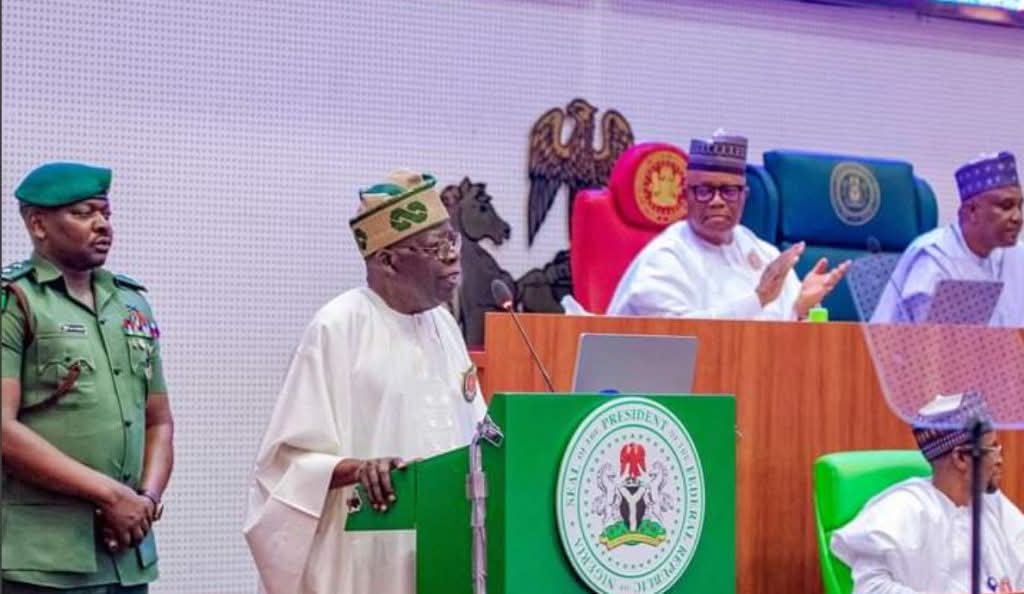
When President Bola Ahmed Tinubu recently presented the budget, the response from lawmakers was not rigorous interrogation but choral praise, political genuflection, and performative loyalty. Instead of probing figures or outlining concerns, legislators:
-
Sang “On Your Mandate”
-
Bowed in near-imperial reverence
-
Offered no immediate, substantive critique of fiscal assumptions
This was not parliamentary democracy; it was political theatre.
Key Failures of the Current Process
Absence of Robust Debate
No extended second-reading debate. No public contestation of assumptions. No ideological divergence.
Legislative Capture by the Executive
The Assembly increasingly behaves as an extension of the Presidency, undermining separation of powers.
Transactional Politics (“Stomach Infrastructure”)
Oversight has been replaced by personal survival politics, where loyalty is rewarded and dissent punished.
Padding Without Scrutiny
Instead of line-by-line evaluation, the fear is that committees will merely insert:
-
Fictitious constituency projects
-
Inflated allocations
-
Duplicated line items
—all without addressing macroeconomic sustainability or national priorities.
Erosion of Public Trust
Nigerians no longer expect their representatives to defend the public interest, only to negotiate their share.
Compare and Contrast: Then vs Now
| 8th National Assembly | 10th National Assembly |
|---|---|
| Multi-day budget debates | Near-automatic acquiescence |
| Visible opposition voices | Near-total alignment |
| Executive challenged | Executive celebrated |
| Budget as policy document | Budget as patronage instrument |
| Institutional confidence | Institutional subservience |
Why This Matters for Nigeria
Budgets are not just financial documents; they are moral statements of national priorities. When legislatures fail to interrogate them:
-
Debt balloons unchecked
-
Social sectors suffer
-
Corruption thrives quietly
Citizens pay the price through inflation, unemployment, and declining public services. A legislature that cannot say “No” or “Explain” cannot protect democracy.
Conclusion: From Oversight to Obedience
The tragedy of the 10th National Assembly is not that its members are uniquely corrupt—history shows that corruption is not new. The tragedy is the collapse of legislative courage.
Where debate once existed, silence reigns.
Where scrutiny once thrived, praise-singing dominates.
Where representation once mattered, survival politics now rule.
Nigeria does not need a perfect National Assembly.
It needs a brave one.