
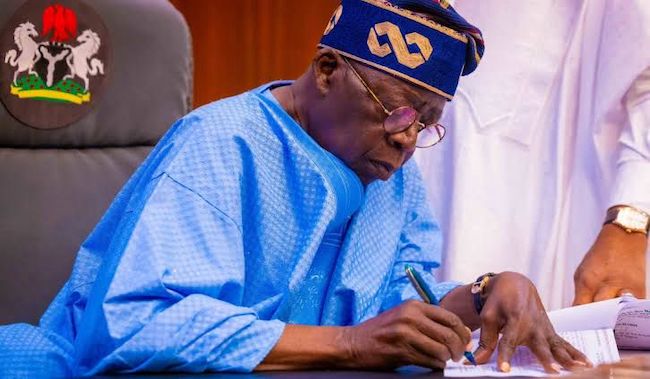
As Nigeria’s long-running debate over state creation resurfaces, fresh signals from Abuja suggest a pivotal turning point. President Bola Ahmed Tinubu is believed to be leaning towards approving the creation of a single additional state—an outcome that could reshape regional balance and political calculations ahead of the next electoral cycle.
At the centre of this emerging consensus is Anioma State, a long-sought aspiration of communities in Delta North who identify culturally and historically with the South-East. If approved, Anioma would become the sixth state in the South-East, a region that has, since 1996, remained the only geopolitical zone with just five states.
Sources familiar with high-level consultations say discussions have progressed beyond speculation. The presidency, in concert with leaders of the National Assembly and other key stakeholders, is reportedly weighing the political, constitutional and equity implications of granting just one request among the many competing demands for new states across the federation.
For advocates of Anioma, the moment feels unusually ripe. The argument is anchored not only on cultural affinity but also on a broader claim of structural imbalance. Supporters contend that adding Anioma to the South-East would help address a sense of long-standing marginalisation, particularly in federal appointments, representation and resource distribution—areas often tied, informally, to the number of states in a region.
Yet the proposal has not been without controversy. Within Delta State, opposition has emerged from groups who argue that Anioma should remain within the South-South, warning that a shift could dilute regional strength and alter existing political arrangements. Others counter that identity and historical ties, rather than contemporary administrative boundaries, should guide the decision.
Behind the scenes, however, the presidency is said to be focused on feasibility and political equilibrium. Among the dozens of proposals before the National Assembly, Anioma is reportedly viewed as the most viable—both in terms of popular support and its potential to correct what many see as an uneven federal structure.
Senator Ned Nwoko, who represents Delta North, has been a leading voice in pushing the cause onto the national stage. He has described the current momentum as unprecedented, urging unity among Igbo leaders and communities to seize what he calls a rare window of opportunity. To him, Anioma’s creation is not merely administrative, but symbolic—a reconnection of kin across the Niger and a step towards a more inclusive federation.
Under the scenario being discussed, Anioma State would have Asaba as its capital, reinforcing the city’s existing administrative stature. While timelines remain uncertain, insiders suggest that any decisive move would follow the conclusion of legislative processes at both national and state levels, as required by the constitution.
If realised, the creation of Anioma State would mark one of the most consequential acts of state restructuring in decades. Beyond redrawing maps, it would signal an attempt—however limited—to address deep-seated grievances about representation, belonging and fairness within Nigeria’s complex federal arrangement.
For now, all eyes remain on Abuja, where political arithmetic, regional sensitivities and presidential judgment converge. Whether Anioma becomes reality or remains another chapter in Nigeria’s long history of unfulfilled statehood dreams may soon be decided.