
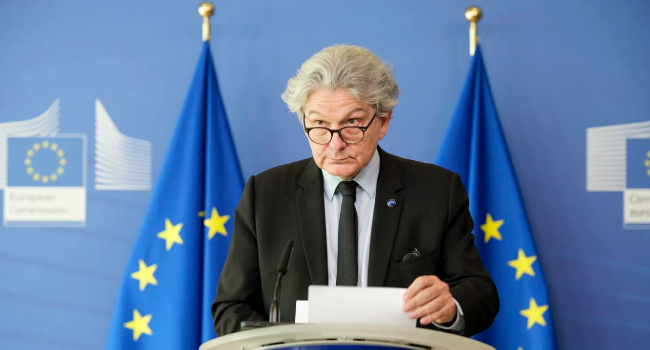
The US State Department announced it will deny visas to former EU Commissioner Thierry Breton and four other individuals, accusing them of attempting to “coerce” American social media platforms into censoring certain viewpoints.
In a statement, the department categorized these individuals as “radical activists” and “weaponized NGOs,” asserting that their actions contribute to foreign governments’ censorship campaigns against American speakers and companies.
Breton, known for his clashes with tech leaders like Elon Musk over compliance with EU regulations, has been labeled the “mastermind” of the Digital Services Act (DSA), a significant piece of EU legislation imposing rigorous content moderation standards on social media platforms.
In response to the visa restrictions, French Foreign Minister Jean-Noel Barrot condemned the move, emphasizing that Europe should not allow its digital regulations to be dictated by outside influence. He asserted that the DSA was democratically adopted and does not extend its reach beyond Europe.
Breton criticized the US’s decision as a “witch hunt,” likening it to the McCarthy era when individuals faced persecution for perceived ideological affiliations. He urged Americans to reconsider their perspective on censorship.
Washington has been increasingly vocal against EU regulations, particularly after recent fines imposed on Musk’s company for DSA violations. The escalating tension includes potential sanctions against key European companies, signaling a broader dispute over digital regulatory authority.
The visa ban also targets other figures involved in digital rights advocacy, such as Imran Ahmed from the Center for Countering Digital Hate and members of the German organization HateAid.
The US maintains a strong stance against what it perceives as extraterritorial overreach by foreign regulations that affect American free speech rights.