
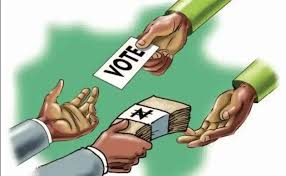
The House of Representatives has approved significant amendments to the Electoral Act, introducing tougher penalties for individuals involved in vote buying and selling. The proposed amendments include a minimum of two years’ imprisonment and a fine of N5 million, or both. Offenders will also face a 10-year ban from contesting elections.
This decision was reached during a clause-by-clause consideration of the House Committee on Electoral Matters report, overseen by Deputy Speaker Benjamin Kalu. The amended Clause 22 imposes harsher sanctions on those engaged in the buying or selling of votes and voter cards, replacing previous penalties that capped fines at N500,000 with these more stringent measures.
Additionally, the House has adopted an amendment to Section 60(3) of the Electoral Act, mandating the Independent National Electoral Commission (INEC) to electronically transmit results from polling units in real time to the INEC Result Viewing Portal (IREV), alongside the physical collation of results. This new provision aims to strengthen safeguards against manipulation.
Lawmakers also revised the sanctions for presiding officers who deliberately breach procedures related to counting, announcing, and transmitting polling unit results. The new Section 60(6) prescribes a minimum fine of N500,000 or at least six months in prison, or both, for non-compliance.
In a bid to improve election planning, the House approved a clause requiring that election funds be released to INEC at least one year prior to a general election. To combat electoral fraud, penalties for multiple voter registrations have also been increased, with offenders now facing a minimum fine of N100,000 or a year’s imprisonment.
The deadline for political parties to submit their candidate lists to INEC has been extended from 180 days to 210 days before an election, allowing for better processing time. The House further supported the use of electronically generated voter identification, including downloadable voter cards with unique QR codes, for voter accreditation and voting.
Following the consideration, Chairman of the House Committee on Electoral Matters, Adebayo Balongun, announced that the House will not repeal the Electoral Act 2022 as initially planned, but will pursue targeted amendments instead, after broader reform proposals failed to gain sufficient support among lawmakers and stakeholders.
The committee emphasized that the ongoing legislative process indicates a lack of consensus on more extensive reforms, which included suggestions for early voting and adjustments to election timelines.