
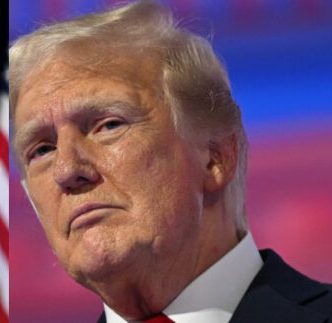
President Donald Trump and Mexican President Claudia Sheinbaum have held their first in-person meeting, a long-anticipated engagement that unfolded during the draw ceremony for the 2026 FIFA World Cup in Washington. Although immigration has defined much of the administration’s dealings with Mexico, the conversation at this meeting largely shifted toward trade, tariffs and bilateral cooperation linked to the tournament.
The delay in the two leaders meeting face-to-face has been notable, considering the traditionally high priority placed on early engagement between the United States and its southern neighbor. An earlier attempt to meet during the G7 summit collapsed after Trump abruptly returned to Washington amid tensions in the Middle East.
In the lead-up to the meeting, Sheinbaum signaled her intention to raise the issue of U.S. tariffs on Mexican automobiles, steel and aluminum. Mexico remains the United States’ largest trading partner, and the ongoing review of the U.S.-Mexico-Canada Agreement has kept trade matters in sharp focus. U.S. Trade Representative Jamieson Greer has begun examining the agreement as the upcoming joint review approaches.
Both governments have recently adjusted priorities due to a marked decline in illegal border crossings and the administration’s recurring but largely unrealized tariff threats. Trump and Sheinbaum have frequently discussed fentanyl trafficking and tariff concerns by phone, even as other world leaders have already met the U.S. president in person.
Despite the long delay, Sheinbaum has maintained a working relationship with Trump by combining respect, occasional humor and strategic firmness. Her diplomatic approach surfaced earlier when she tempered controversy over Trump’s suggestion to rename the Gulf of Mexico as the “Gulf of America” by quipping that the entire North American continent could be rechristened “América Mexicana,” referencing an early 19th-century document in Mexican history.
However, tensions surrounding tariffs remain. Mexico continues to navigate U.S. warnings of broad levies that could severely impact its economy. The country also recently failed in its opposition to a new 1% tax on remittances sent from the United States, a measure taking effect at the start of the new year.
Immigration enforcement remains another contentious point. The administration has intensified deportation operations in several major U.S. cities, with National Guard deployment contributing to a rise in immigration-related arrests. Although officials say the focus is on serious offenders, many of those detained have no violent criminal history, heightening anxieties within immigrant communities and among Mexican nationals in the United States.
Mexico has responded to U.S. criticism over drug trafficking by strengthening internal security efforts. Increased authority for security chief Omar García Harfuch and the extradition of several cartel figures, including Rafael Caro Quintero, have drawn positive attention from Washington after years of friction between law enforcement agencies on both sides.
Yet disagreements persist. Sheinbaum publicly rejected Trump’s suggestion of deploying U.S. troops to Mexico for anti-cartel operations, insisting that foreign military involvement is not an option. Her comments followed Trump’s openness to authorizing cross-border strikes, a proposal that Mexico firmly opposes.
While Trump characterized Sheinbaum as overly cautious in dealing with cartels, the Mexican leader declined to escalate tensions, avoiding public confrontation and maintaining a diplomatic posture focused on stability heading into 2026.